


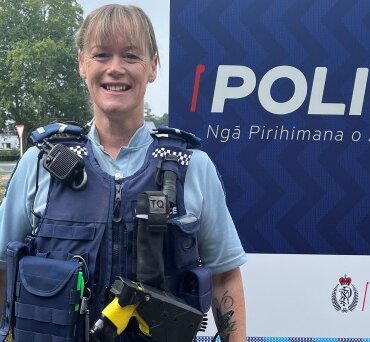
Deb Hann
I have mentioned car crime a lot recently. In good news for the week, we have made a great catch with the apprehension of four youths who were responsible for four times attempted unlawful takes motor vehicle (aka trying to steal cars).
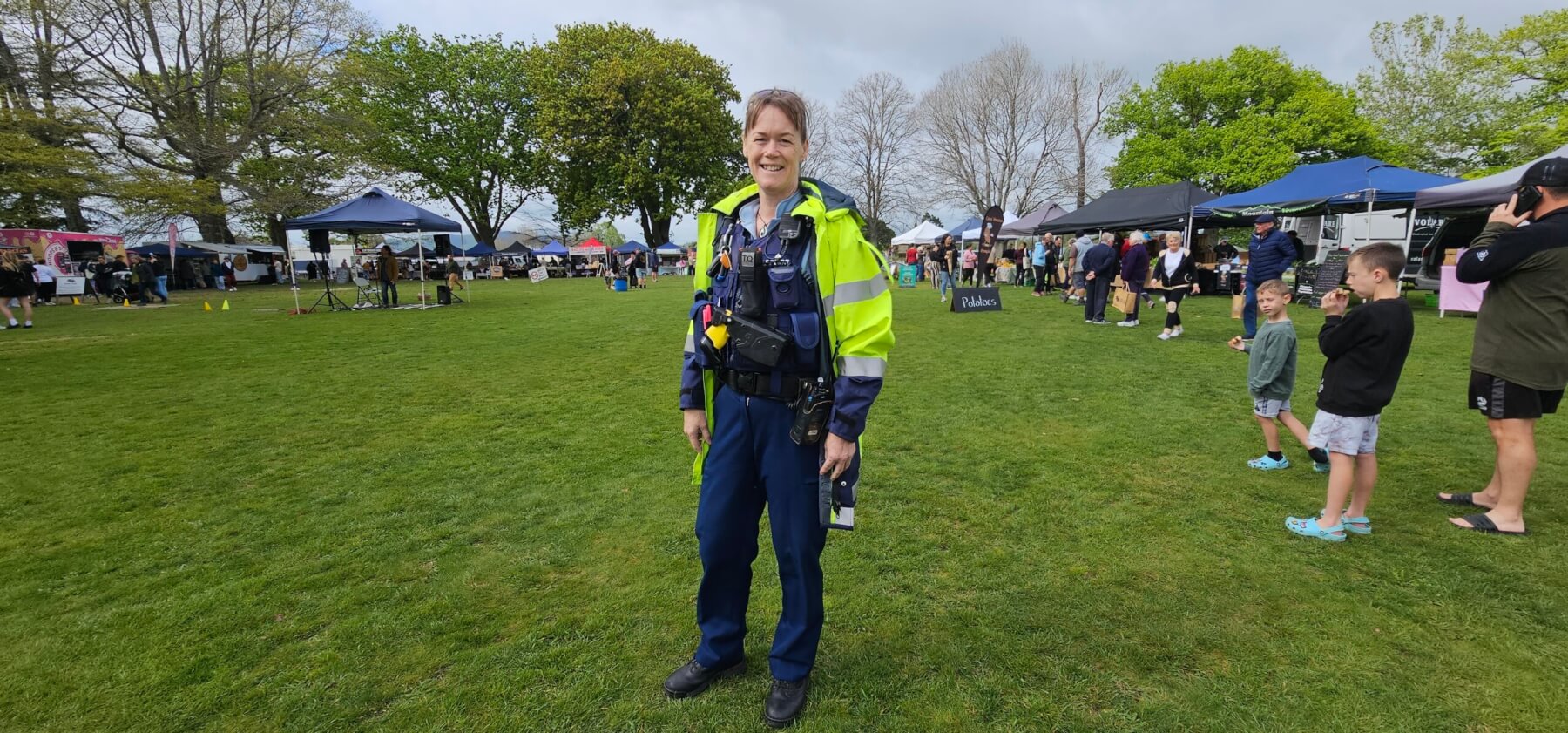
Deb Hann – Senior Constable at the Cambridge Farmers’ Market. Photo: Mary Anne Gill
All are now going through the Youth Aid process and being held to account. Investigations into the other car crime that has recently occurred, are ongoing. In a separate incident, a woman was also arrested for breaching court bail conditions and appeared back in court.
This week I want to go back to the topic of Family Harm. In New Zealand it is estimated that only 33 per cent of family harm incidents are reported and research suggests as much as one in two New Zealand women have experienced intimate partner violence, when psychological abuse is included. Indications are that where a man is the victim of family harm, it may be as low as 10 per cent of incidents that are reported.
In so many such incidents, children witness the harm in the home. Children who are in bed or in a different room at the time of an argument or assault, are equally affected and may feel conflicted emotionally about what they are experiencing. We know that when a child appears unaffected following an incident at home, it suggests that the abuse happens often enough for it to have become normalised in their lives. I feel as a community we each have an obligation to speak out to stop or prevent harm when we believe it is occurring. This is particularly true when we are talking about protecting our most vulnerable, the young and elderly.
If you know that family harm is occurring in your neighbourhood or extended family, please let the right people know. Where there is immediate or likely danger, you need to call 111 at the time. If you have concerns for the general wellbeing of a child, you may also make a report to Oranga Tamariki on 0508 326459.
You can remain anonymous if necessary, however if you feel able to provide your contact details, the information you give can then be verified and further detail obtained if required. The outcome of a police visit following a family harm call out depends on what has happened and the offences that may have been identified. At the very least, a full report is submitted for review by the Integrated Safety Response panel. This group – composed of key government and non-government agency representatives – ensures appropriate follow-up and safety planning can be carried out. With family harm known to only escalate over time without intervention, the risk of serious physical and psychological harm is real where it continues to go unreported. We all deserve to feel safe in our relationships.