

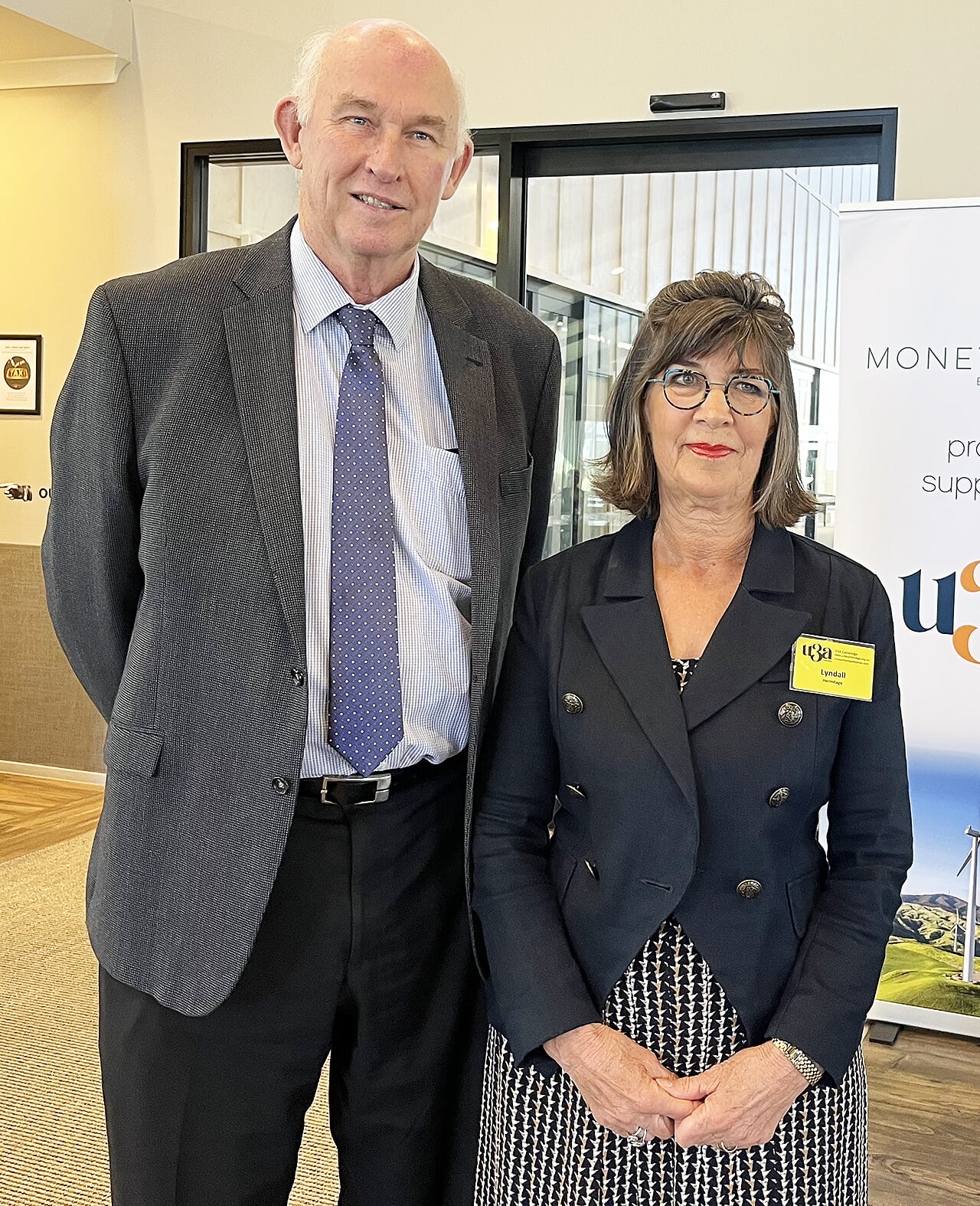
Hill Laboratories founder Dr Roger Hill with Cambridge U3A committee member Lyndall Hermitage at this month’s meeting.
Award-winning scientist and founder of Hill Laboratories, Dr Roger Hill, may have taken on a test too far when trying to convince Cambridge University of the Third Age (U3A) members that analytical chemistry was riveting stuff.
Hill spoke on ‘The excitement of analytical chemistry – an oxymoron?’ at the group’s September meeting.
While providing almost 200 guests with compelling evidence around his argument, he also left them musing as to how the search for orca DNA in Wellington harbour left lab workers staring at kangaroo DNA.
That reference related to new eDNA (Environmental DNA) technology now being used in New Zealand laboratories, including at Hill Laboratories. It is considered a powerful new tool for testing the genetic material left behind by living things as they pass through water or soil, enabling scientists to accurately detect the presence of organisms while causing no harm.
“It lets us amplify hundreds of thousands of DNA strands rather than a single one, giving us the ability to make better sense of the data,” said Hill.
Scientists using the technology after a pod of orca were spotted in Wellington harbour anticipated finding orca DNA but were confounded when kangaroo DNA popped up. They later discovered that a pet food manufacturer had been using kangaroo meat in their product, leaving miniscule traces in the water.
“That shows the power of this test. We have just got the equipment to do it and believe it will give farmers a handle on the health of waterways passing through their properties,” he said. “The manual process currently used to identify organisms present is very time-consuming. This new technology means very low traces of DNA present in stream waters can be determined … it is likely to become a very important tool in monitoring the health of our waterways.”
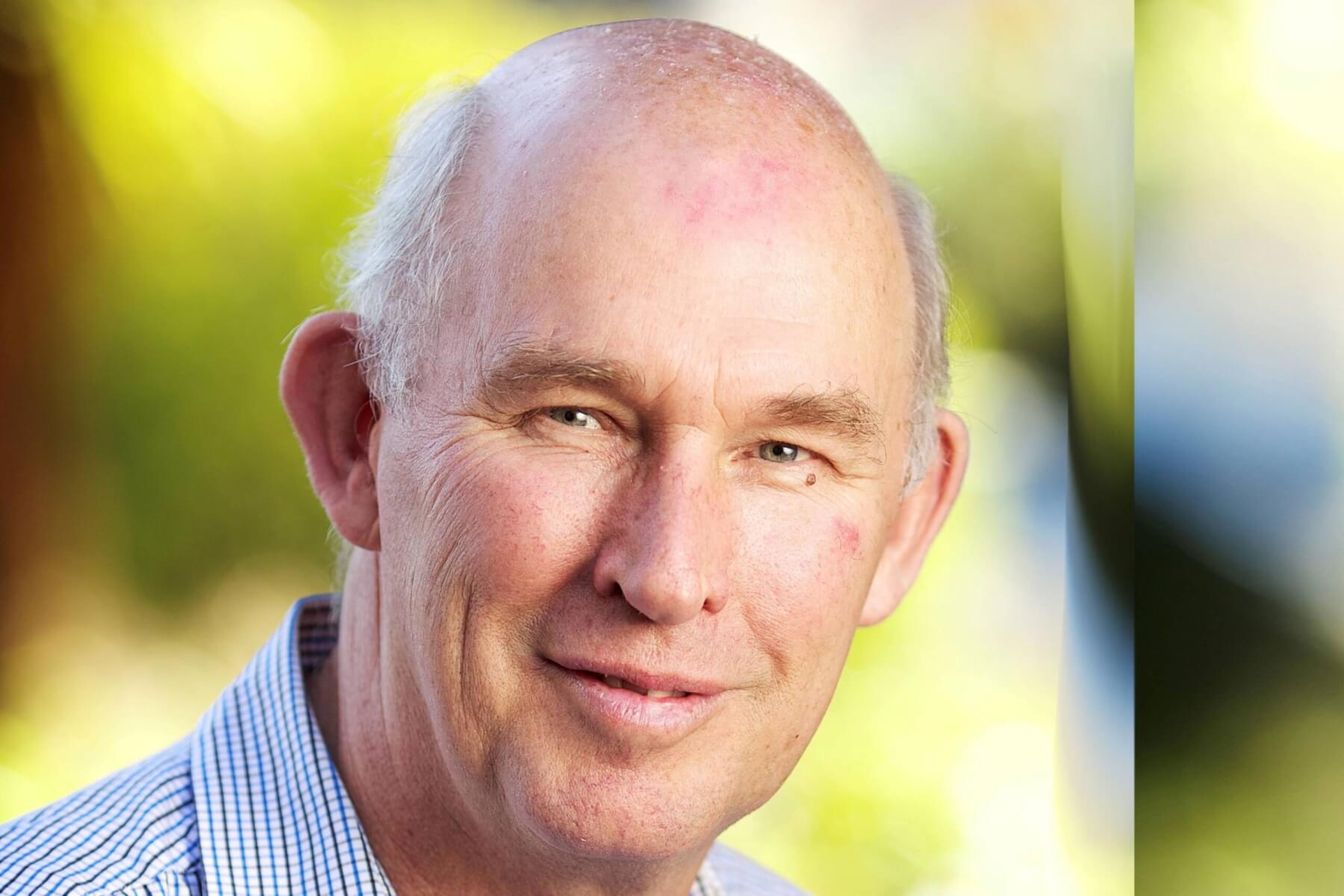
Roger Hill
Dr Hill was born in Te Aroha and grew up on a dairy farm. He left Auckland University with a PhD in Chemistry and was soon working for a then new company in Cambridge, Analytical Services Ltd. Eight years later, in 1984, he and his wife Anne started Hill Laboratories, a facility that now employs 450 people nationwide and has gained global recognition as New Zealand’s largest privately-owned analytical laboratory.
In his talk to Cambridge U3A, Dr Hill discussed the importance of new DNA testing across other areas, including its application in assessing the number of earthworms present in New Zealand soils.
“Earthworms are a great indicator of healthy soils. The method that has long been used to measure their populations in our soils is laborious and time-consuming. It involves digging multiple spade squares of soil across a paddock, carefully breaking them up and removing all the earthworms present for counting,” he said. “The new test can be done on the same soil sample already being collected for fertiliser advice.”
Dr Hill also spoke to authenticity testing, used largely to provide proof of origin around foods where counterfeit products may be marketed, and DNA testing as it pertains to paternity testing, investigating ancestry and in criminal investigations.
“So, while analytical chemistry may appear to be dry and boring, it is far from it. It is a great enabling tool for many of today’s researchers.”